
 +86-18633235200
Phenomenon: Excessively frequent flashover, accompanied by decreased dust collection efficiency
Causes:
(1) Discharge occurs outside the electric field of the electrostatic demister, such as discharge at the isolating switch, high-voltage cable, damping resistor, etc.
(2) The spark rate of the electric control cabinet is not properly adjusted.
(3) Fluctuations in operating conditions lead to drastic changes in flue gas parameters.
(4) Improper adjustment of the distance between cathode wires and anode plates.
Troubleshooting:
(1) Eliminate the discharge at the faulty parts.
(2) Adjust the spark rate potentiometer and switch the device to automatic mode.
(3) Notify the chief operator to optimize process conditions and improve flue gas parameters.
(4) Adjust the distance between cathode wires and anode plates to the standard range.
Phenomenon:
Low primary and secondary voltage; low secondary current. The primary current is much higher than normal, rises rapidly, and is disproportionate to the secondary current rise.Cause: Turn-to-turn short circuit occurs in the rectifier transformer, or the silicon stack is open-circuited or broken down.
Troubleshooting:
Conduct an open-circuit test. If current is detected on the primary side, it indicates internal component damage, magnetic bias or short circuit in the transformer. Lift the transformer core for maintenance and replace the damaged components.
Phenomenon:
Low primary and secondary voltage; low secondary current. The primary current is extremely high, rises disproportionately to the secondary current, surges and changes abruptly. This may blow the quick fuse, and the transformer emits obvious abnormal noise.
Causes:
(1) Short circuit fault in the low-voltage winding of the rectifier transformer;
(2) Insulation damage to the rectifier transformer core (including through-core bolts), resulting in severe eddy current.
Troubleshooting:
(1) Replace the low-voltage winding;
(2) Re-insulate the transformer core.
Phenomenon:
When primary and secondary currents reach rated values, the primary voltage stays between 280–330V, the secondary voltage ranges from 40–50kV, and no flashover occurs.Cause: Severe leakage at the high-voltage cable and its terminal.
Troubleshooting: Reconstruct the high-voltage cable and its terminal.
Phenomenon:
Frequent frequency conversion of the alkali supply pump, large fluctuation in rotation speed, and drastic changes in the pH value of the circulating water tank.Cause: Clogging of the neutralization pipe in the circulating water system by foreign matters.
Troubleshooting:
Clean the foreign matters inside the anode tubes of the electrostatic demister.
Phenomenon:
Gradual decrease in circulating water flow, accompanied by a progressive drop in dust collection efficiency.
Cause:
Scaling on the pipelines of the electrostatic demister and the circulating water pump.Troubleshooting: Appropriately reduce the pH value of the circulating water tank to 5.2 during operation.
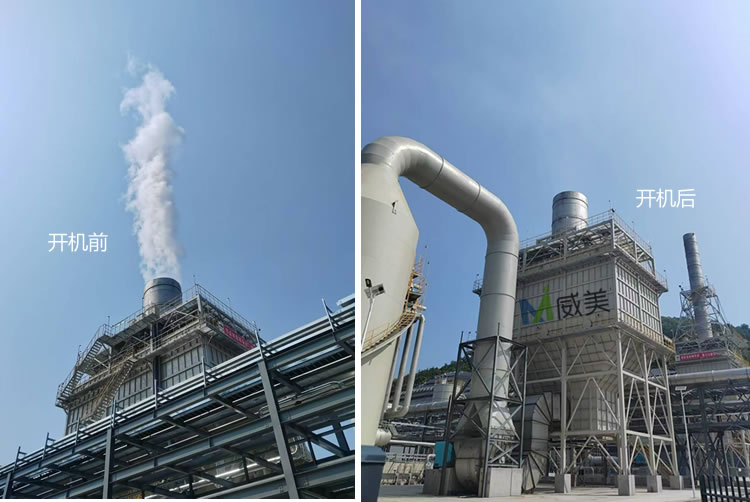
Wet Electrostatic Precipitator (WESP)